

AOPA Luxembourg works within IAOPA on reforms of medical certification for non-commercial pilots. Here is a report from AOPA Germany:
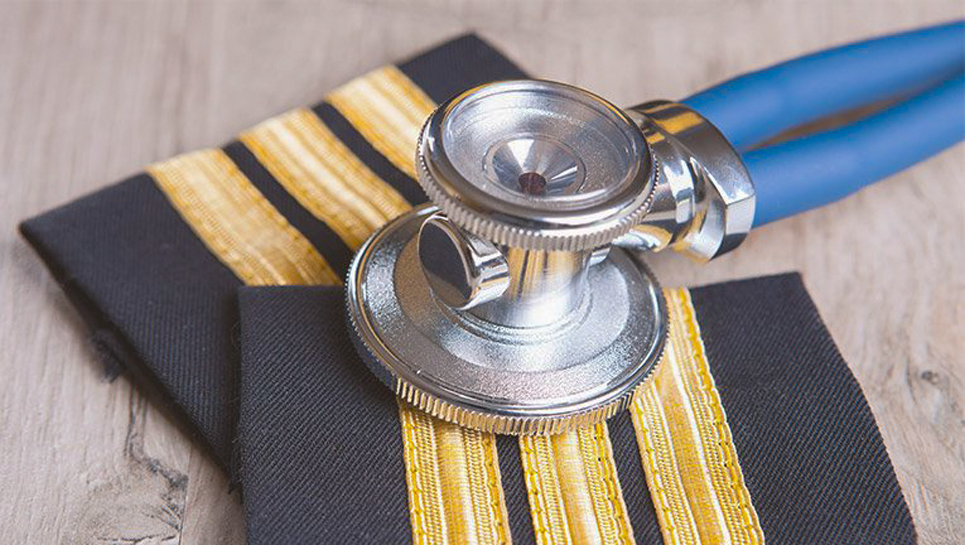
It’s clear that aviation medicine can’t continue as it has been, a point on which private pilots and their associations agree. The examinations cause unnecessary stress year after year. Depending on our age, private pilots have to see an aviation medical examiner once a year, every two years, or, if they’re young, every five years, to have their fitness to fly assessed. Those who are young and in excellent health take it in stride. Everyone else, however, is understandably tense, and pilots approach these examinations with good reason: Almost everyone knows fellow pilots who are clearly healthy and active, drive cars, but still have to wait months for their medical certificate or even lose it altogether.
The system of aviation medicine, based on the military’s aviation medical findings from the First World War and largely adopted by the ICAO, is mostly adequate for professional pilots, but adjustments to reflect current medical knowledge would be desirable. But for private pilots, the requirements are simply excessive and not commensurate with the actually very low risk. Furthermore, the system in Europe is far too formalistic; the EU aviation medical system hardly trusts individual doctors to make decisions anymore.
The rest of the world is currently revamping its system. In Great Britain and the USA, some very interesting solutions have already been found:
In Great Britain, pilots can self-declare their medical fitness for national licenses, submitting this declaration online to the authorities. The so-called “Pilot Medical Declaration” (PMD) is submitted via an online system called CELLMA. Only for international flights and in cases of certain medical issues is a medical certificate from an aviation medical examiner still required.
In the USA, there is the BasicMed system for pilots who want to avoid the stricter requirements of a Class 3 medical certificate. Here, the FAA places greater emphasis on the personal responsibility of private pilots, who are also responsible for assessing their own fitness to fly on all days between medical examinations: They must decide for themselves whether they want to fly with a runny nose or whether they can do so safely. For inpatient hospital stays, surgeries, and serious illnesses, the situation is naturally different; in those cases, a visit to an aviation medical examiner is required.
With BasicMed, pilots can consult any approved physician and have their self-assessment, based on a countersigned official checklist, confirmed. This medical certificate then allows them to fly in the USA and some neighboring countries, broadly speaking, in aircraft up to 5,700 kg (1,600 lbs) with up to six passengers, even under IFR (Instrument Flight Rules). To date, 80,000 private pilots have applied for BasicMed, and the number continues to rise.
In Germany (and elsewhere) , aviation medicine wasn’t a major issue for decades. A few years ago, pilots could still consult their aviation medical examiner, openly discuss any problems, and receive a result. In cases of doubt or minor issues, aviation medical examiners made the decision for the pilots, essentially saying, “It’ll be fine! But if your condition worsens, it’s best to stay grounded and come back for another appointment.” And indeed, the system worked reliably. Much has changed since then. The EASA regulations have made procedures more complicated; aviation medical examiners have far less discretion and significantly more demanding documentation requirements. And apparently in Germany, the LBA, as the authority responsible for aviation medicine in Germany, sees itself as having a responsibility to scrutinize aviation medicine particularly rigorously, question decisions, and also significantly reduce the number of aviation medical examiners. Previously, we had approximately 500 aviation medical examiners in Germany; now there are fewer than 300. The explanation I was given was: “Doctors with few examinations often have no understanding of the procedures; they’re no longer wanted.” This has resulted in some decentralized regions of Germany no longer having any aviation medical examiners.
EASA also apparently recognizes that Europe is lagging behind the latest developments in the USA and Great Britain regarding medical standards for non-commercial pilots. A global solution from the formalistic ICAO in Montreal is not likely to come anytime soon. But something urgently needs to be done in Europe as well, and EASA is therefore currently gathering suggestions from the industry.